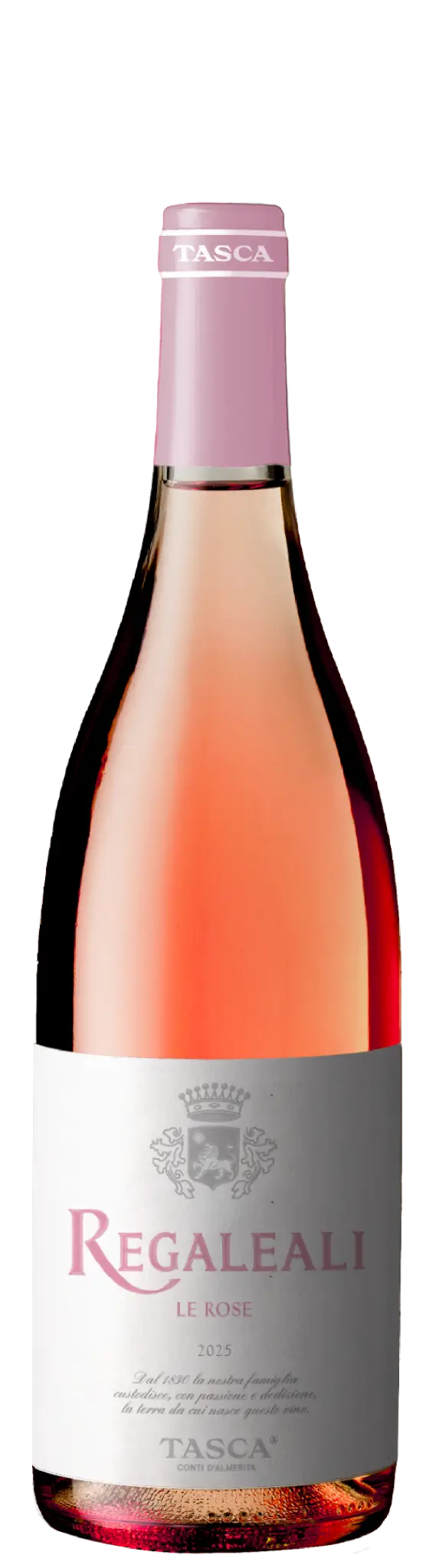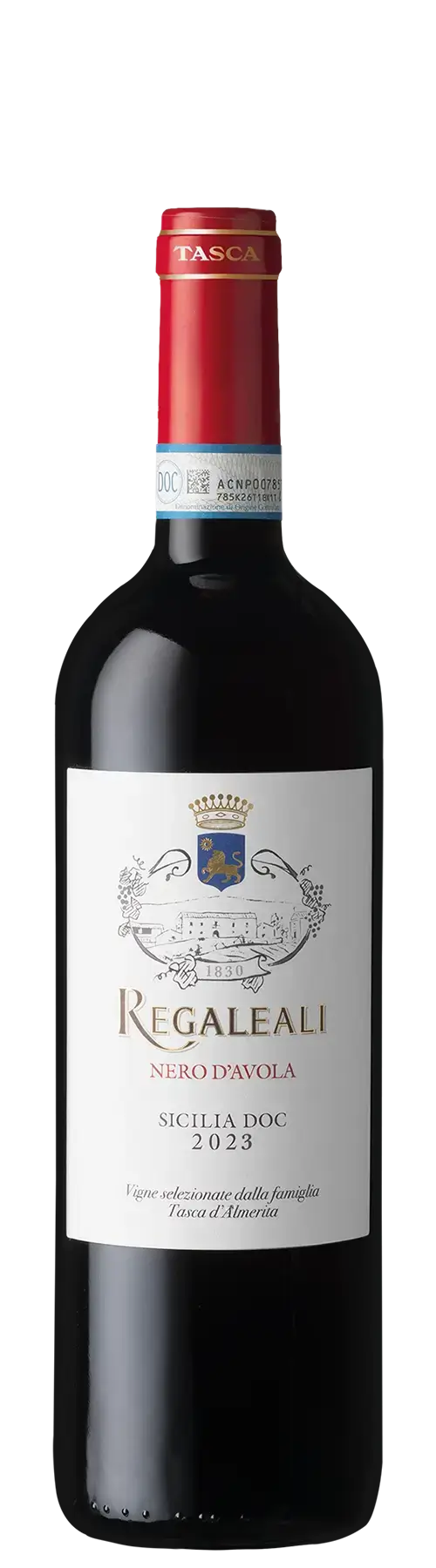
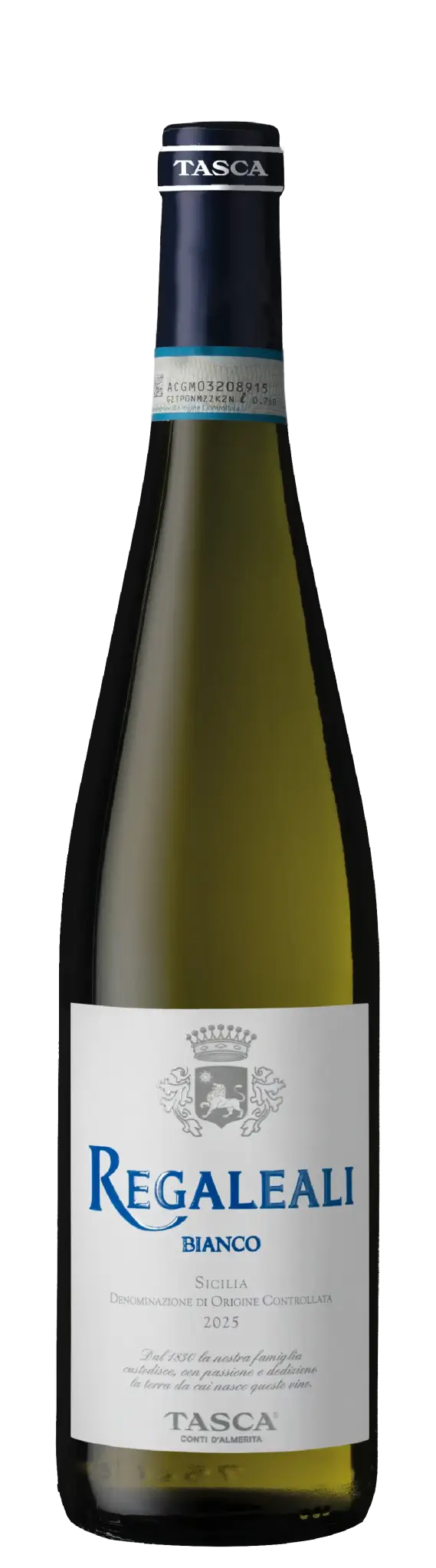
Regaleali, a white wine, of quality and with character. The first wine produced by the Counts of Tasca d'Almerita on the Regaleali Estate. The best known and most widely distributed. A blend of the Sicilian grapes Inzolia, Cataratto and Grecanico, of rare balance and versatility. Today with an even more essential and refined label. Regaleali has been fashion nowfor more than forty years, and is the fruit of on-going research and investment. A classic with an attentive eye towards the future.


One of the most successful rediscoveries among native Sicilian grape varieties, this white grape belongs to the Greco family. The medium-sized, five-lobed leaves present irregular serrations. Clusters are long, medium-winged and with average-sized berries; they have thick, bloom-covered skins that turn a lovely golden colour when fully ripe.
One of Sicily's most important indigenous white varieties, second only to the Catarratto clones in terms of acres planted. Typically bunches will be loose-packed, winged and pyramidical. The oval-shaped berries vary in size from medium to small; the yellow-grey skin carries a bloom. When mature, the fruit generally has a high sugar content (19-27%), and low acidity (3.2 to 5.8 per thousand). It's also known as Ansonica.
A white variety widespread in Sicily, where it's also known as Bianco Alcamo. There are two main clones: common white or Latin Catarratto ('bianco comune'), and shiny white Catarratto ('bianco lustro'). The bunches are pyramidical in shape, conic-cylindric, varying in density from loose-packed to compact. The grey-yellow berry is medium-sized, its skin almost without bloom. It's considered a high-yield variety, capabale of producing 12 kilos or more of grapes per vine. It's resistant to Peronospora, but susceptible to viral diseases. Catarratto is one of the main ingredients of Marsala, hence its diffusion especially in the west of Sicily between the end of the nineteenth and the beginning of the twentieth century.
One of the best-known white varieties, this grape of French origin has a long history in northern Italy, but until recently was not much planted in the south. Clusters are fairly small, cylindrical and winged. The round, smallish berries are thick-skinned and golden yellow in colour. It's a tremendously aristocratic grape, unanimously considered among the most refined of the white varieties. Unlike most other 'noble' grapes, it combines its notable sensory qualities with robust health and relative ease of cultivation: it's resistant to cold, but makes itself at home in hot climates too. It flowers and matures early, thus avoiding the threat of diseases linked to cold and autumn humidity.